Build Log
Measuring the bottom of a pond through winter
We wanted a reliable record of the water temperature at the bottom of a pond throughout winter. I could not find an off-the-shelf setup I trusted for that job, so we ordered a digital probe from DigiKey that makes failures visible instead of silently giving a believable reading.
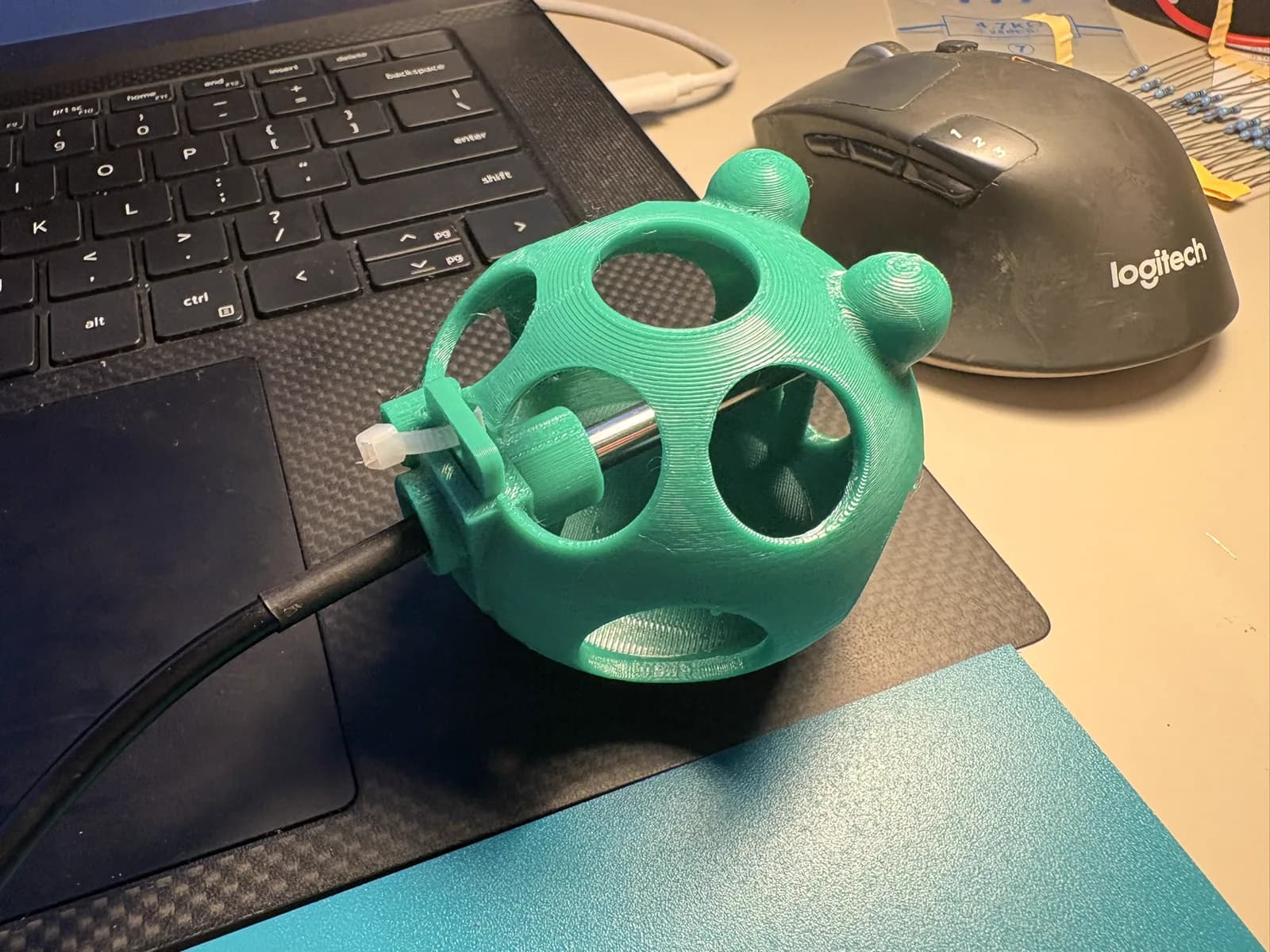
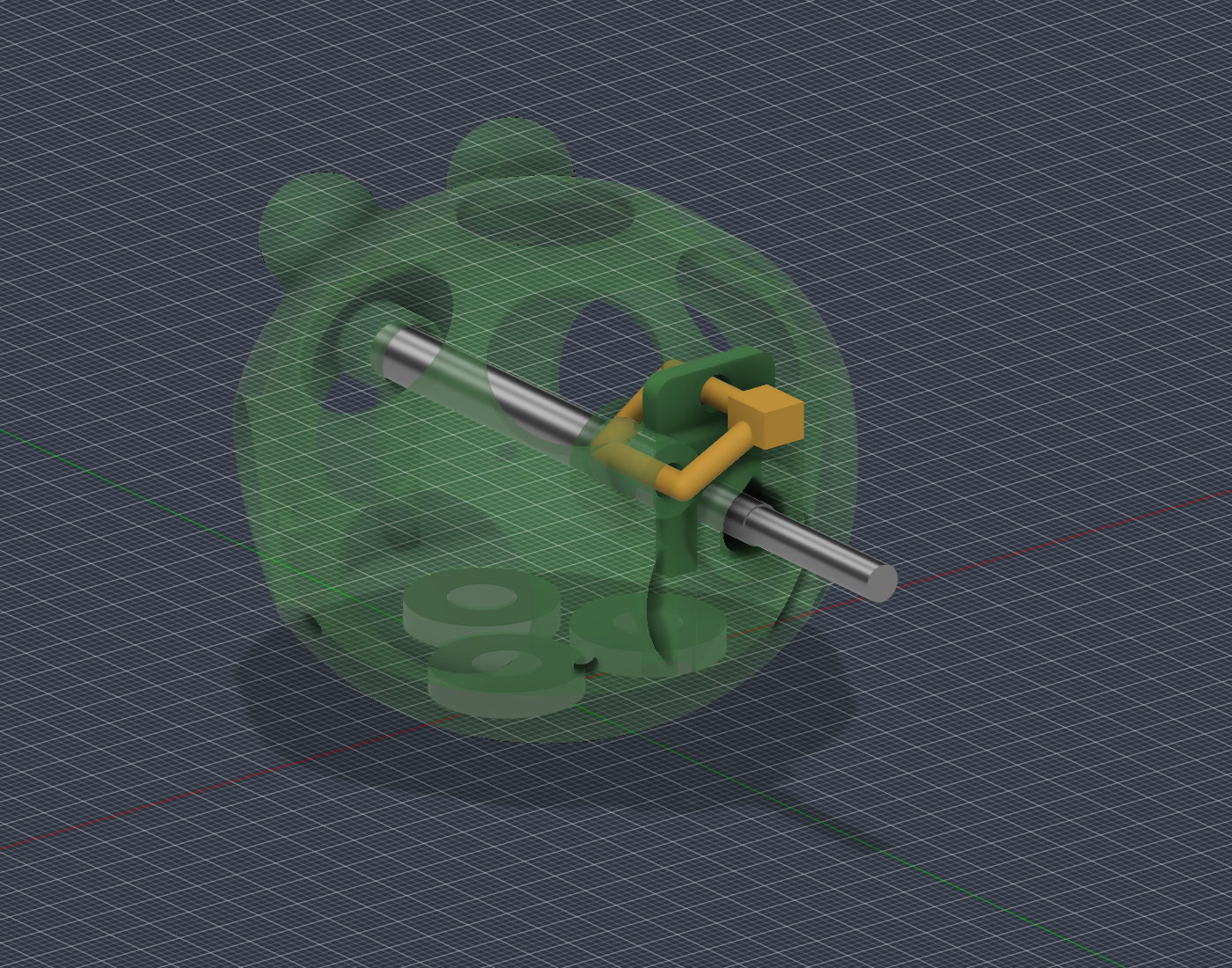
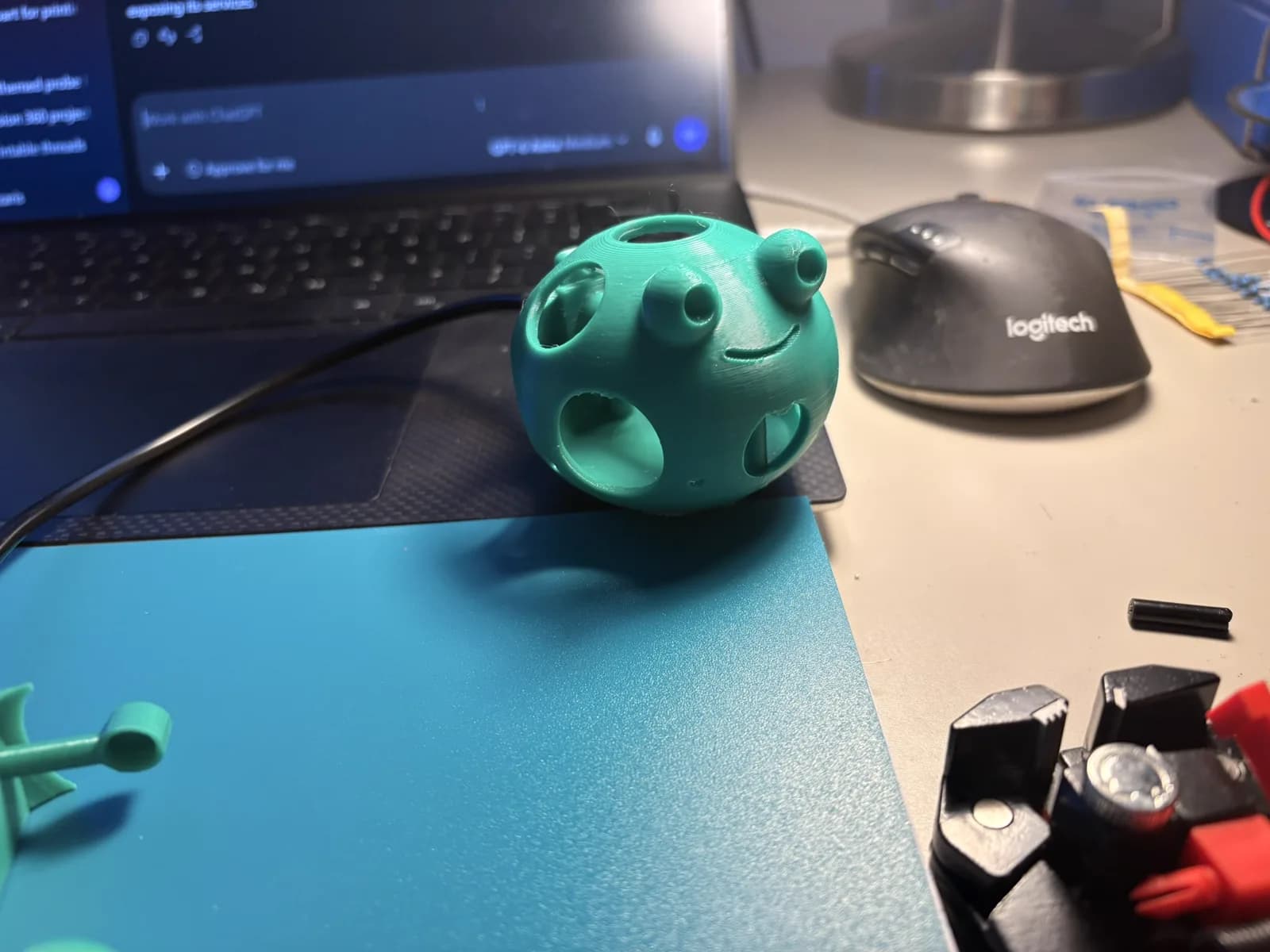
I designed a frog-shaped enclosure around the probe. Water can reach the sensing tip, and stainless steel washers embedded during the print give the enclosure enough ballast to sink and keep the probe submerged.
A separate printed keeper slides over the cable behind the probe shoulder. In the current CAD design, a small zip tie links the keeper to an eye on the frog, preventing it from lifting while allowing the probe to be removed later.
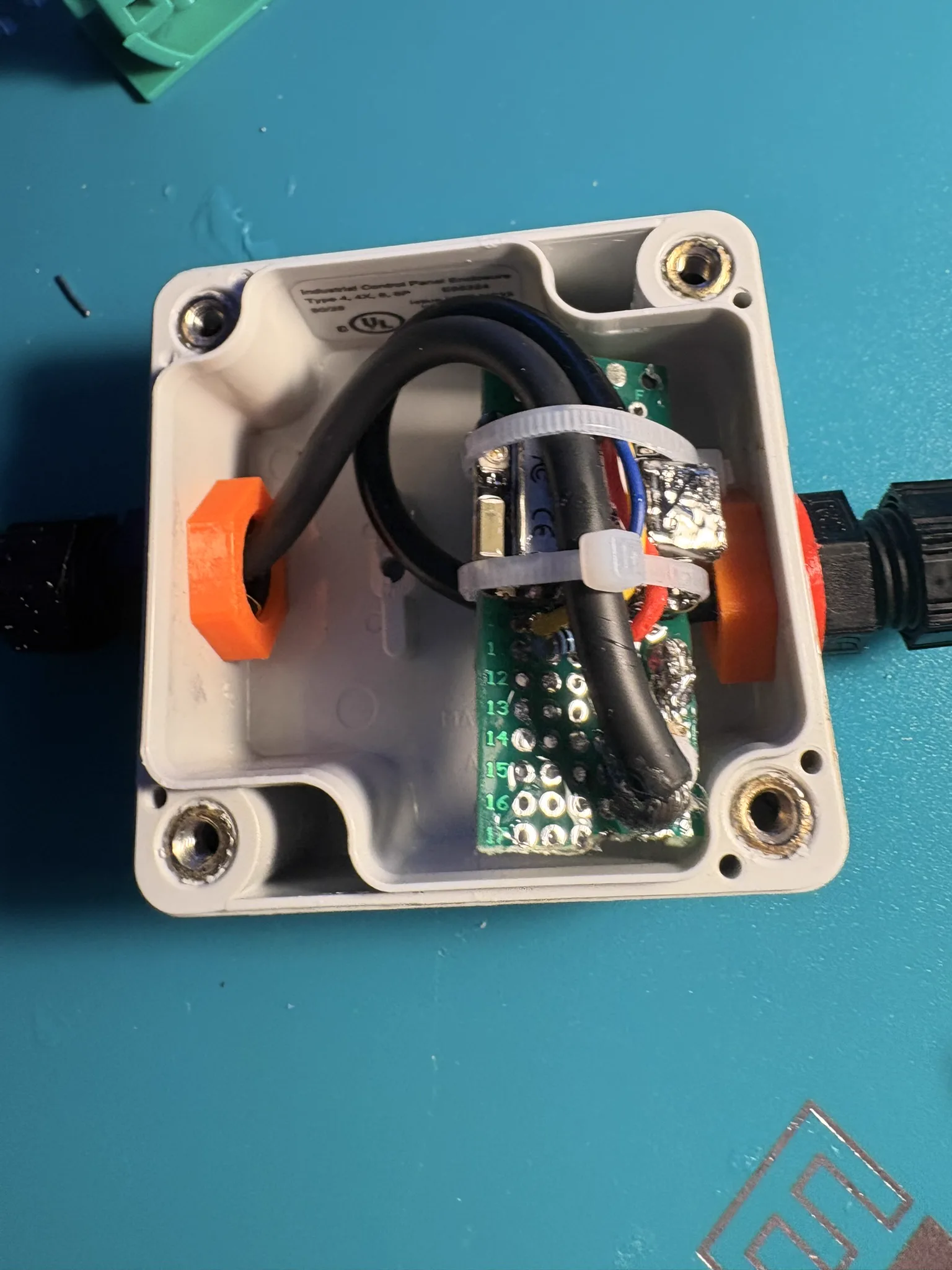
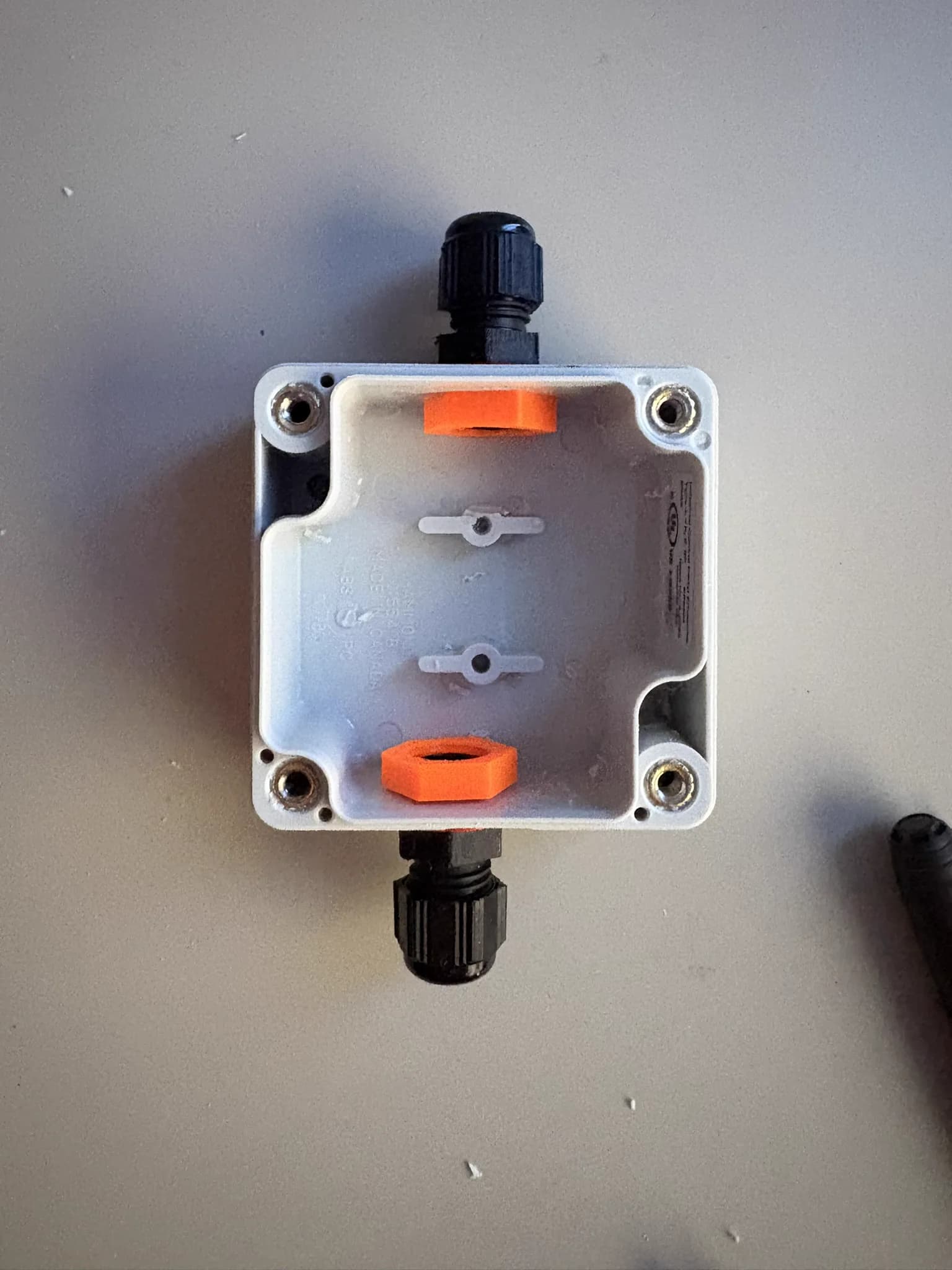
The supporting circuit is hand soldered on protoboard inside a small electrical box, then conformal coated. An outdoor USB-C wall adapter supplies power without bringing mains conversion into the box.
A zipper duct for a diesel heater
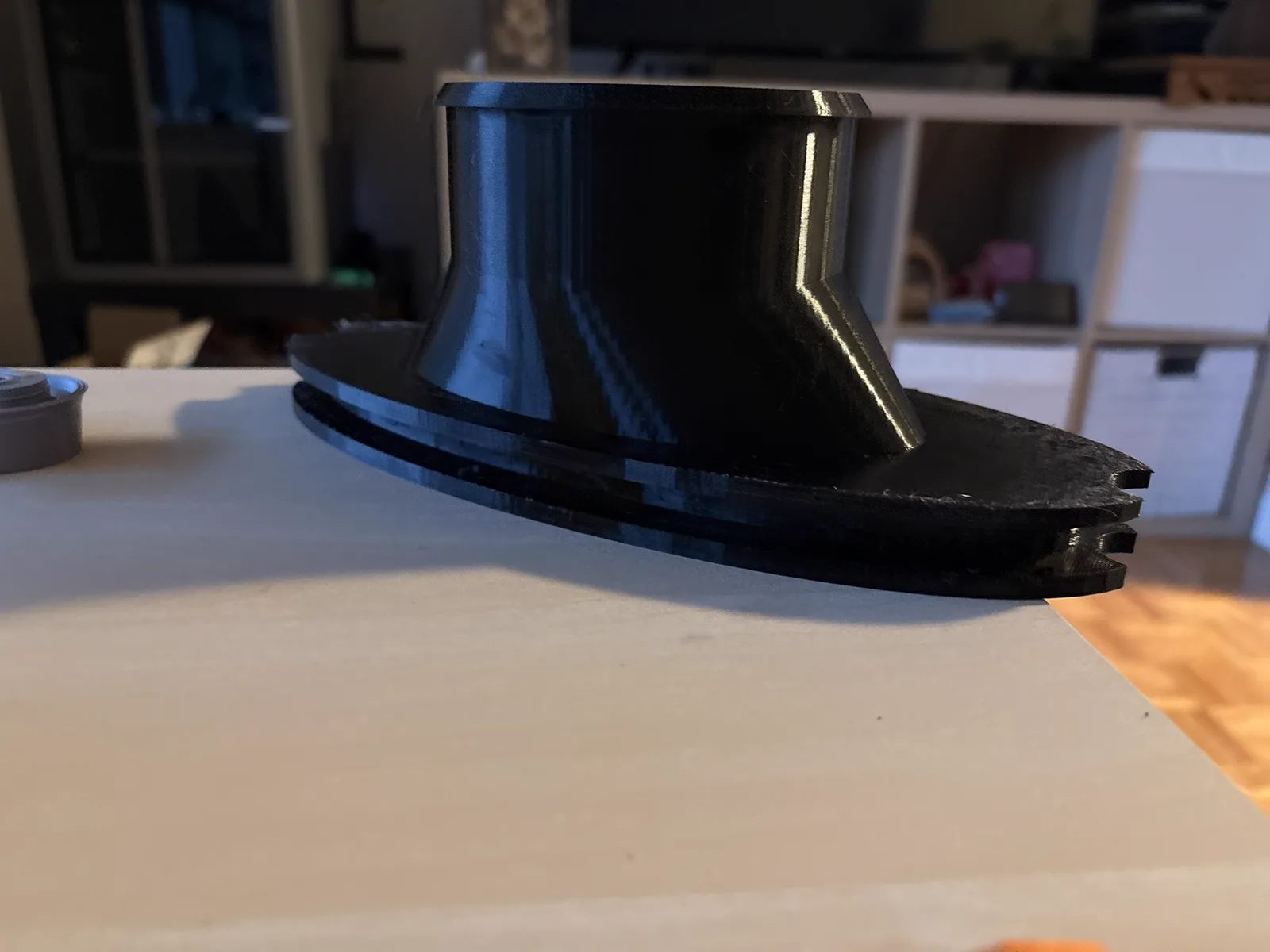
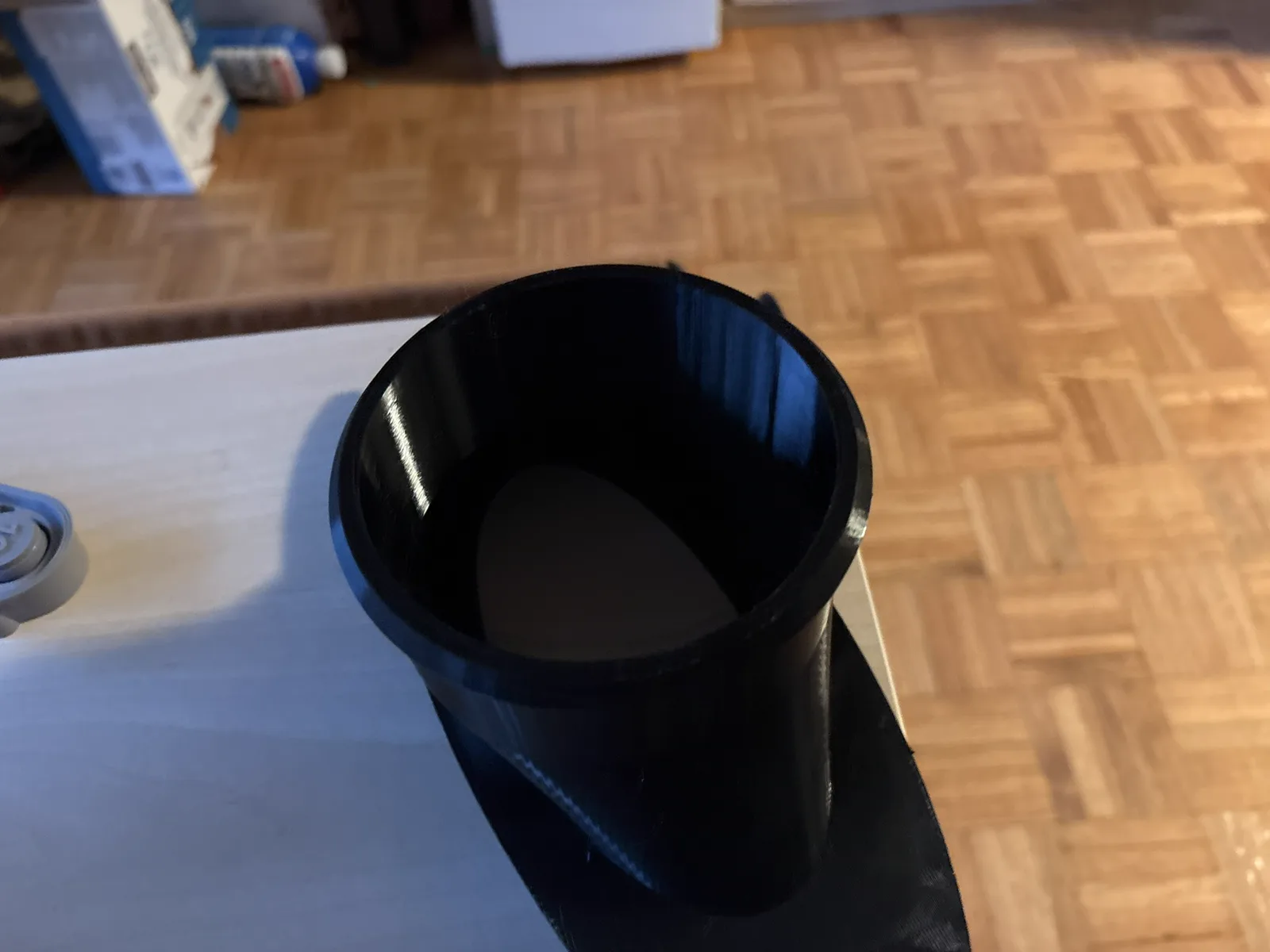
We wanted to pipe warm air from a diesel heater into a tent without leaving the zipper open to the cold. Starting from a zipper-duct reference, I modeled an adapter that slides over the tent edge: a groove captures the zipper, while the round cuff connects to the heater hose.
The print turns that opening into a controlled air path. A later compact revision reduced the zipper footprint while keeping the passage open through the round-to-oval transition.